| Surface | Linear RGB Value |
|---|---|
| Walkable floor | RGB 35-50 |
| Cave walls | RGB 25-45 |
| Deep crevices | RGB 15-25 |
| Accent lights | RGB 120-200 |
Must be able to clearly identify floor, nearby walls, and the path forward without a personal light source.
Dark ceilings instead of dark floors.
“dark but readable”: RGB 25-35
BP_LunosInteriorSky provides exposure control / depth fog.
TODO:
- Give this parameters!
- Integrate skylight (grey cubemap, very low brightness)
Fill Lights
One possible solution is non physical fill lights combined with plausible source lighting.
Before - points of interest too dark, light does not lead. Realistic but dull.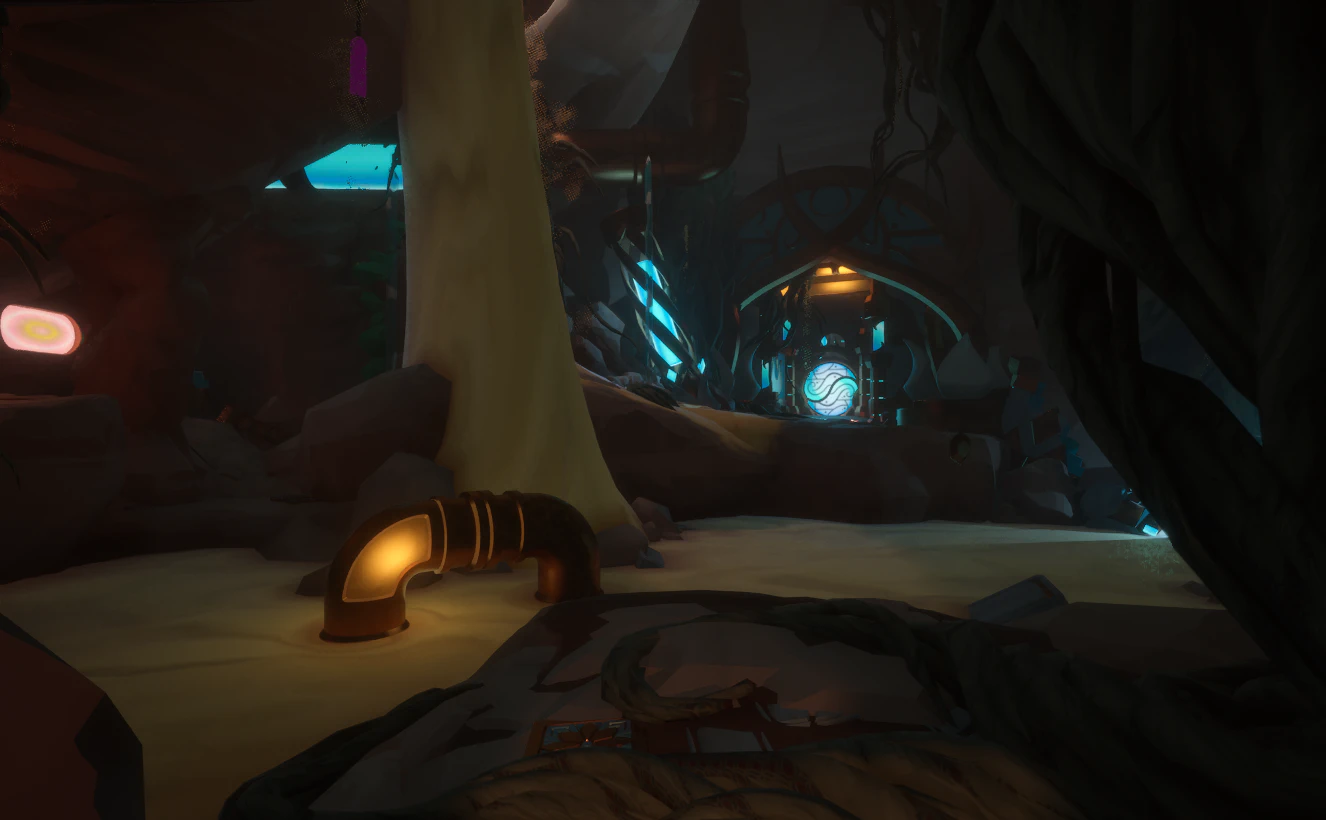
Crude but effective lighting paintover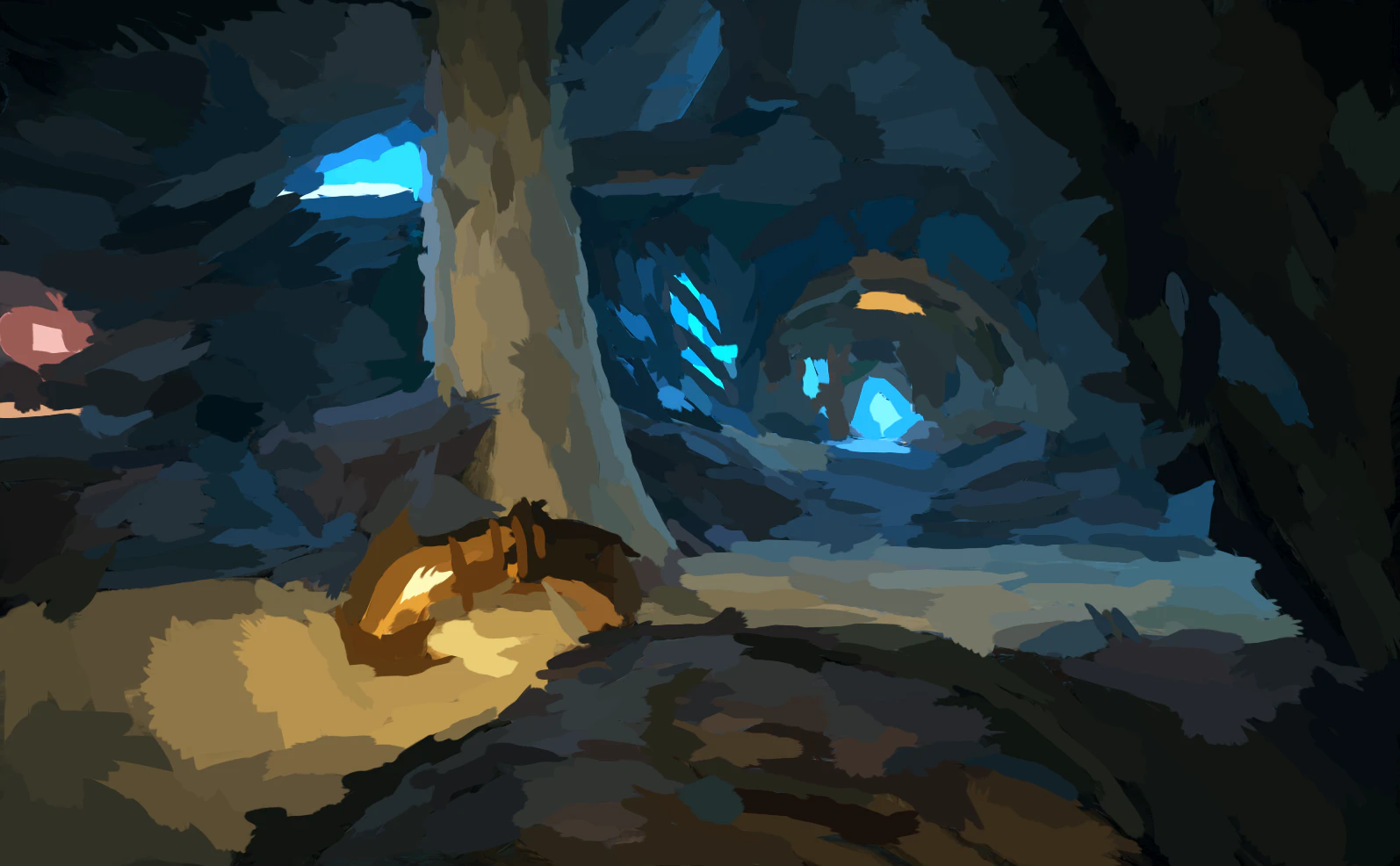
After - Source lighting tweaked, NPR fill light added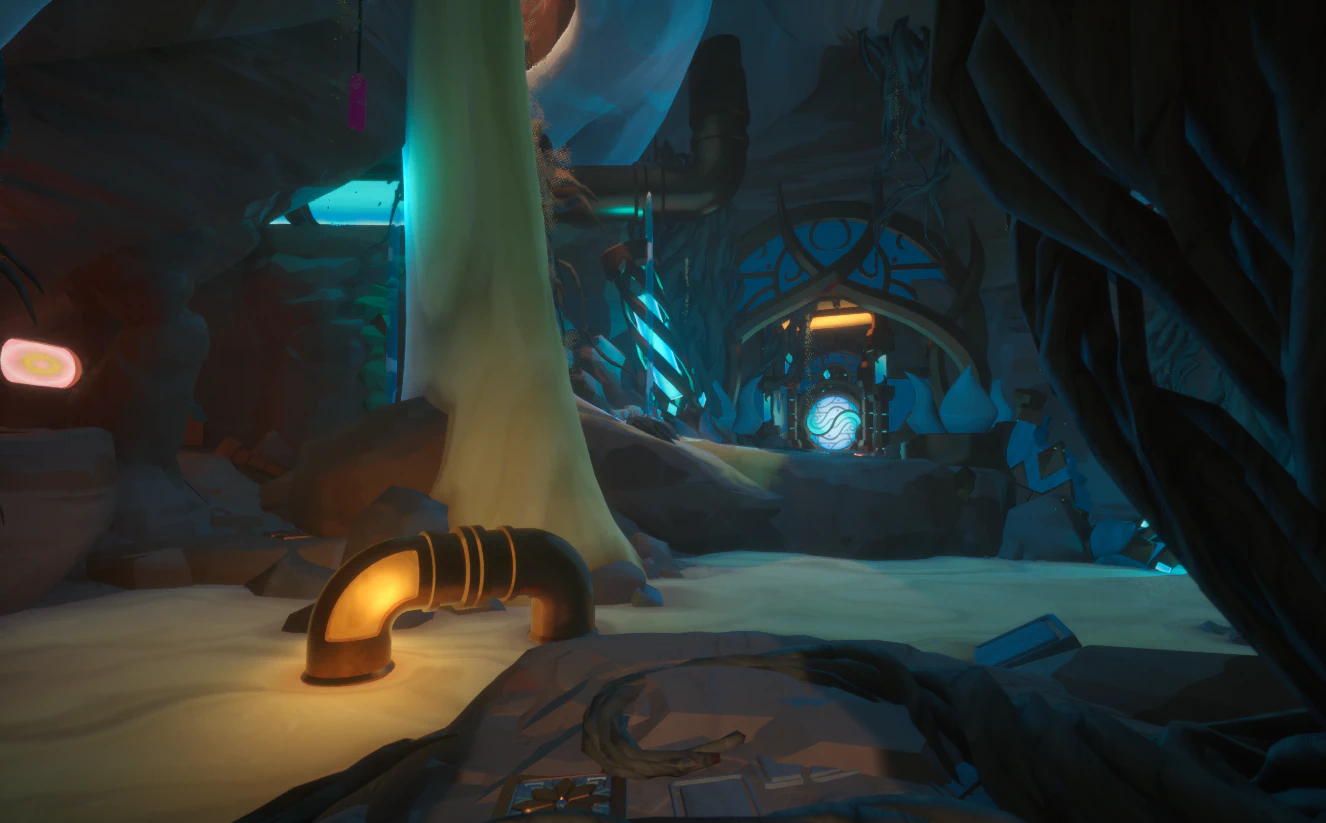
Fill lights need fairly specific parameters to not call too much attention to themselves:
- Cast Shadows = False
- Most lights in the scene should not cast shadows anyways, but fill lights should essentially never
- Volumetric Scattering Intensity = False
- Inverse square falloff = False
- Light falloff Exponent = 1
- Control the falloff purely with attenuation radius, which provides a linear falloff that is easy to dial in
- You can experiment with other falloffs, but I’ve found one works best
- Intensity = 0.1 or lower typically
- Source radius = fairly large, like a quarter or so of attenuation radius.
- Mostly affects specular, and softens the directionality of the light
- Specular Scale
- You may want to tweak this to tone down reflections
- The above scene using 0.2
Place one main fill light near the most important part of the scene. There should be one or ideally multiple source lights near where this light is - think of the fill light as an NPR “bounce” lighting that illuminates an area.
Try to place as few fill lights as possible! We’ll profile this.
Future stuff (work on later)
Outdoor night
Terrain: RGB 35-60 Foliage: RGB 25-50 Structures: RGB 20-45 Sky: RGB 40-100